As any marketer knows, traffic is the lifeblood of your website. It’s the foundation of your visibility, customer growth, and sales. But getting more traffic isn’t the only way to grow revenue. Conversion rate optimization (CRO) helps you earn more from the visitors you already have by improving the journey from first click to purchase, demo request, signup, or inquiry. A strong conversion optimization program brings research, testing, design, analytics, and copywriting together so every change is tied to a business goal instead of a hunch.
Small improvements in form completion, checkout flow, landing page clarity, or offer positioning can compound across paid search, organic traffic, email, and social campaigns. The result is not just a better-looking website, but a more efficient growth engine.
What does a conversion optimization agency actually do?
A conversion optimization agency studies how visitors behave on your website, identifies what stops them from taking action, and tests improvements that can increase the percentage of visitors who convert. Instead of guessing what could work, a CRO agency uses data, user research, controlled experiments, UX improvements, and performance tracking to determine exactly what does work.
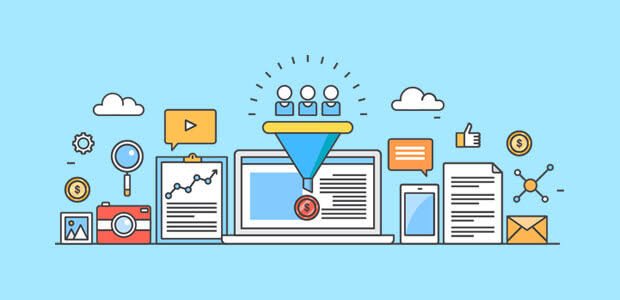
That work usually starts with a simple question: where are conversions leaking from the funnel? Visitors may be arriving on the wrong page, missing the value proposition, abandoning a form, hesitating at checkout, or failing to trust the offer. A digital CRO agency assesses those friction points and then builds a testing roadmap to remove them.
A typical engagement may include:
- Analytics review: Studying traffic sources, device behavior, conversion paths, and revenue impact.
- User research: Gathering feedback through surveys, heatmaps, session recordings, customer interviews, or usability reviews.
- Funnel analysis: Finding where users drop off between landing page, product page, cart, form, checkout, or booking step.
- A/B and multivariate testing: Comparing different versions of pages, site elements, messages, layouts, CTAs, or offers.
- UX and design improvements: Making pages easier to scan, read, navigate, trust, and act on.
- Copywriting and messaging: Clarifying benefits, reducing hesitation, and matching the page to the visitor’s intent.
- Reporting and learning: Translating test results into next steps, not just dashboards.
The best companies treat CRO as an ongoing process. A single winning test is useful, but the larger value comes from repeated learning. Testing identifies what customers actually care about, what objections slow them down, which segments respond differently, and where your site can convert most effecitvely.

Profit grows when the same traffic works harder
Conversion optimization is powerful because it improves the efficiency of your existing marketing. If you are already paying for ads, investing in SEO, sending email campaigns, active on social media, or building brand awareness, every visitor has a cost. When more of those visitors become customers, your acquisition spend becomes more efficient.
This matters especially when traffic costs rise. A company can keep increasing ad budgets, but if the landing page fails to convert, more spend simply sends more people into the same leaky funnel. Conversion rate optimization services focus on fixing that leak before asking the business to buy more attention.
The profit impact can materialize in several ways:
- Higher revenue per visitor When the same number of visitors produces more purchases, leads, or booked calls, revenue grows without requiring an increase in traffic.
- Lower customer acquisition cost Better conversion rates reduce the cost of acquiring customers, as more users convert from the same campaign spend.
- Better paid media scalability If landing pages convert more efficiently, campaigns become easier to scale.
- Improved customer insight CRO tests reveal what messages, offers, visuals, and page experiences resonate with real buyers.
- Stronger lifetime value opportunities CRO is not limited to first purchases. It can improve upsells, renewals, onboarding, account creation, and repeat buying flows.
The key is that CRO connects website changes to measurable outcomes. A redesigned button only matters if it helps move the right metric. A shorter form only matters if it improves qualified lead volume rather than flooding the sales team with poor-fit contacts. Profit-focused CRO keeps the business result at the center.
The CRO process is research before redesign
Many people believe that CRO is just changing colors, buttons, or headlines until something improves. In reality, effective conversion optimization starts before design work begins. A serious CRO practitioner will want to understand your traffic, audience(s), offer(s), analytics setup, and revenue model before recommending tests.
The process often follows a sequence like this:
- Define the business goal The agency clarifies whether the priority is purchases, demo requests, trial signups, booked calls, average order value, subscription starts, or another measurable outcome.
- Audit the current funnel Analysts review where users arrive, in what numbers, how long they engage with content, how deeply they scroll, what they do next, and where they leave. This helps separate surface-level opinions from real behavioral patterns.
- Collect qualitative insight Numbers show what is happening, but user feedback helps explain why. Surveys, recordings, reviews, and interviews can uncover confusion, objections, or missing information.
- Build test hypotheses A hypothesis links an observed problem to a proposed solution. For example: “If we make shipping costs visible earlier, checkout abandonment may decrease because users will not encounter a late surprise.”
- Prioritize tests Not every idea deserves immediate attention. Agencies usually rank tests by potential impact, confidence, level of effort, and relevance to business priorities.
- Design and launch experiments Designers, copywriters, developers, and QA specialists create test variations that can be measured cleanly.
- Analyze and apply learning Winning tests may be implemented, losing tests may refine the next hypothesis, and inconclusive tests may reveal issues with traffic, segmentation, or test design.
This disciplined approach protects teams from random redesign cycles. It also builds an institutional knowledge base over time, so each experiment sharpens future decisions.
What should you expect from conversion rate optimization services?
You should expect a conversion rate optimization firm to provide a clear process, transparent reporting, statistically responsible testing, and recommendations tied to business outcomes. The agency should explain what it is testing, why it matters, how it will measure success, and what the results mean for the next decision.
In practical terms, a CRO partner may work across your entire digital experience. For ecommerce brands, that might mean product pages, collection pages, cart flow, checkout, promotions, merchandising, and post-purchase journeys. For B2B companies, it may involve landing pages, pricing pages, demo forms, lead magnets, content journeys, and sales-qualified lead quality.
Strong services often combine several disciplines:
- Strategy: Deciding which parts of the funnel deserve attention first.
- Data analysis: Finding patterns in analytics and campaign performance.
- UX research: Understanding what visitors struggle to understand or complete.
- Copy and positioning: Making the offer clearer, more credible, and more relevant.
- Design: Creating layouts that guide attention and reduce cognitive load.
- Development: Building test variants accurately without damaging performance.
- Quality assurance: Checking devices, browsers, tracking, and user flows before launch.
- Experiment analysis: Reading results responsibly and turning them into action.
The best work is rarely isolated to one page. A landing page test might reveal that ad messaging is attracting the wrong intent. A checkout test might show that a shipping policy needs to be clearer earlier in the journey. A demo form test might expose that buyers need more proof before they are willing to speak with sales.
Choosing the right CRO partner for your business
Not every agency is right for every company. A startup with limited traffic needs a different CRO plan than a mature ecommerce brand with thousands of daily visitors. A B2B SaaS company with a long sales cycle needs different measurement than a direct-to-consumer retailer optimizing for e-commerce purchases.
When comparing CRO services, look beyond the sales pitch. Ask how the team prioritizes tests, what research methods they use, what platforms they use, who will actually work on your account, and how they handle inconclusive or losing experiments. A confident agency should be able to explain both its creative thinking and its statistical discipline.
Use this checklist when evaluating options:
- Relevant specialization: Does the agency understand your business model, such as ecommerce, SaaS, lead generation, marketplaces, subscriptions, or enterprise sales?
- Documented methodology: Can they show a repeatable process for research, prioritization, testing, QA, and analysis?
- Transparent reporting: Will you see the hypothesis, test setup, metrics, results, and business interpretation?
- Statistical care: Do they avoid declaring wins too early or relying on weak sample sizes?
- Traffic awareness: Do they adjust strategy based on your actual traffic volume and conversion baseline?
- Technical fit: Can they work with your analytics, testing tools, CMS, ecommerce platform, or development workflow?
- Learning mindset: Do they value insights from losing tests, or only celebrate wins?
- Commercial alignment: Does the pricing model match your risk tolerance, budget, and expected upside?
Some businesses want a full-service digital cro agency that handles strategy, design, development, testing, and reporting. Others already have in-house designers or developers and need a specialist to guide research and experimentation. The right model depends on your team’s needs, not just the agency’s service menu.
Pricing models shape incentives and risk
CRO pricing can vary widely because agencies differ in scope, expertise, staffing, and accountability. Instead of focusing only on the monthly cost, consider how the model affects behavior. The cheapest option is not always the least risky if it leads to slow execution, shallow testing, or unclear results.
Common engagement models include:
- Monthly retainer: The agency provides ongoing CRO strategy, test planning, creative work, development support, and reporting for a fixed fee. This model is predictable and works well for companies that want a steady experimentation program.
- Project-based engagement: The agency completes a defined audit, landing page optimization project, or testing setup. This can work for businesses that need a focused improvement but are not ready for a long-term program.
- Performance-based pricing: Fees are tied partly to measurable uplift or agreed outcomes. This can align incentives, but it requires clear tracking, clean attribution, and agreement on how results are calculated.
- Hybrid model: A base fee covers core work, while bonuses or incentives are linked to performance. This balances agency capacity with outcome accountability.
A performance-based or “no lift, no fee” structure can sound attractive because it reduces perceived risk. However, it’s not right for every situation. Both sides need enough traffic, reliable analytics, and a shared definition of lift. If the business has tracking gaps, seasonal volatility, or a long sales cycle, pure performance models can be harder to evaluate fairly.
The Best CRO metrics go beyond conversion rate
Conversion rate matters, but it shouldn’t be the only KPI in the conversation. A higher conversion rate isn’t helpful if average order value drops, lead quality declines, refund rates rise, or sales teams spend more time with low-quality prospects. Profit-focused CRO looks at the full economic picture.
Other metrics to consider include:
- Primary conversion rate: The percentage of visitors who complete the target action.
- Revenue per visitor: A useful metric for e-commerce and paid traffic efficiency.
- Average order value: Whether changes encourage larger or smaller purchases.
- Qualified lead rate: Whether form submissions are valuable to sales, not just more numerous.
- Checkout or form abandonment: Where users stop before completing the action.
- Click-through rate on key CTAs: Whether visitors are moving toward the next step.
- Segment performance: How results differ by device, traffic source, audience, or returning versus new users.
- Experiment velocity: How consistently the team launches meaningful tests.
- Learning quality: Whether each test creates insight that improves the next decision.
A good CRO agency will help you choose the right primary and secondary metrics before tests go live. That prevents teams from moving the goalposts after results come in.
Common CRO mistakes that reduce profit
CRO can create real value, but only when it is done carefully. Many programs underperform because they move too quickly in the wrong places or too slowly in the right ones. The goal is not to run random tests; it is to build a smarter system for revenue growth.
Watch for these mistakes:
- Testing opinions instead of hypotheses: “Let’s try a new hero image” is weaker than connecting your website change to a specific user problem.
- Ignoring traffic quality: If campaigns bring poorly matched visitors, page optimization can only do so much.
- Stopping tests too early: Urgency often encourages testers to “peek” at preliminary results before statistical significance has been reached. Early results can swing dramatically before enough data is collected.
- Optimizing for shallow conversions: More leads aren’t better if they’re not qualified.
- Copying competitors blindly: What works for another brand may fail with your audience, offer, or traffic mix. Don’t try to keep up with the Joneses.
- Redesigning everything at once: Big redesigns can make it harder to understand which change caused the result.
- Neglecting mobile: Many users compare, research, and buy on mobile, so small usability issues can become major revenue leaks.
- Failing to implement winners: A test that wins but never becomes permanent does not create lasting value. You’d be shocked at how often this happens.
One of the biggest mistakes is treating a losing test as wasted effort. If the test was based on a thoughtful hypothesis and measured properly, it can still teach you something useful. It may show that an objection was not as important as expected, that a segment behaves differently, or that another funnel step deserves more attention.
How long does CRO take to show results?
CRO takes time. A well-run program begins with qualitative research, data analysis, tracking checks, test prioritization, and early test planning before moving into active experimentation. The timeline depends on traffic volume, technical complexity, decision speed, and how much preparation your analytics setup needs.
For businesses with enough traffic and clear conversion goals, tests can be planned and launched quickly. For a company with low traffic, broken tracking, or a complex sales cycle, the first phase may focus more on analytics cleanup, qualitative research, and high-confidence changes that do not require traditional A/B testing. As a general rule of thumb, tests should run for at least 2 weeks, in order to account for validity threats or seasonality.
A realistic CRO roadmap may include:
- First 30 days: Audit analytics, define goals, review funnel data, gather user insight, and build a prioritized testing backlog.
- Next 30 to 60 days: Launch early experiments, fix obvious friction, improve tracking, and refine reporting.
- Following months: Expand testing across high-value pages, segment insights, implement winners, and connect CRO learning to broader marketing strategy.
The compounding value comes from consistency. One test can improve a page, but a sustained program can improve the way the company makes growth decisions.
CRO works best when marketing and product teams share the learning
Conversion optimization should not sit in a silo. The insights from CRO can help paid media teams write better ads, SEO teams create stronger landing pages, sales teams understand buyer objections, and product teams improve onboarding or feature communication. A conversion optimisation agency can be especially valuable when it turns test results into broader business learning.
For example, if users respond strongly to a specific proof point on a landing page, that message may deserve a larger role in email campaigns, sales decks, and product pages. If mobile users abandon at a higher rate, the solution may involve design, speed, form usability, or payment options.
CRO isn’t just a website discipline. It’s a feedback loop between customer behavior and business strategy. The more clearly your teams share that learning, the more valuable each experiment becomes.
Final takeaway
Maximizing your results with CRO starts with a practical mindset: before spending more to attract visitors, make sure your existing visitors have a clear, credible, and low-friction path to action. You wouldn’t send more water through a leaky pipe. A skilled conversion optimization agency will help you find the leaks, prioritize the highest-value opportunities, and test improvements with discipline.
Whether you choose a full-service digital CRO agency, a specialized conversion optimization firm, or a flexible conversion rate optimization firm, look for a partner that connects every recommendation to customer behavior and business impact. The goal is not more tests for the sake of testing. The goal is a website and funnel that convert more of the right people, more efficiently, over time.